Story Time

The White Van
I was 13 when a man outside my school handed me a flyer that read “Make up to $200 in a weekend.” At that age, even five dollars felt like a lot of money. I called the number. He told me to be ready at eight on Sunday morning, and that he would come pick me up.
My parents were understandably unsure. Who was this man? Where was I going? I didn’t give them much of an explanation. I just told them I had a job.
On Sunday, he arrived in a white van. As I walked towards it, my heart started racing. For the first time, I wondered whether this was a trap.

Seeing other kids inside was a relief. He handed us boxes of $8 chocolates and explained that he would drop each of us outside a supermarket to sell them. I ended up outside a Walmart.
I spent eight hours in the sun asking strangers to stop. The first few hours were rough. I had to interrupt someone’s day, explain the chocolates, and do it again when they walked past. As a 13-year-old with a stammer, getting the conversation started was a challenge in itself.
The sales began to improve when I paid closer attention to who I was stopping. Someone walking out with both hands full of groceries was hardly going to buy chocolates. Someone walking in with a cart, or carrying a single bag, had room to stop. I started choosing my moments.
I earned $215 that weekend and kept doing the job for a couple of months. Each conversation gave me a little more confidence. I had gone looking for a job and discovered that I loved sales.
Cricket
I grew up obsessed with cricket. At 17, I was captaining an under-19 Canadian team on international tours. Players I had watched growing up were suddenly sharing changerooms with me or standing on the other side of the pitch. The world I had spent years dreaming about was becoming part of my own life.
Years later, in 2023, I was inducted into the Toronto Sport Hall of Honour.

As captain, I couldn’t think only about my own performance. Other players were depending on my decisions. There were moments when I had to speak before I felt ready, because the team needed something from me. I was learning what it meant to have people look to me.
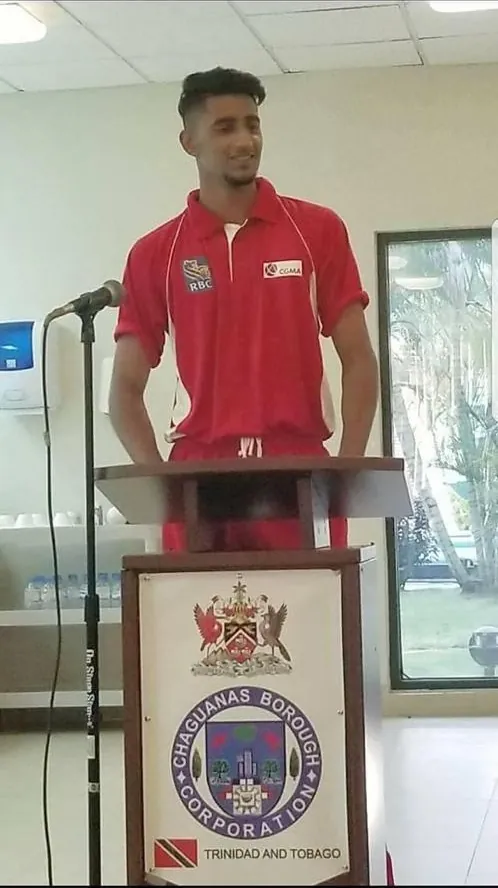
On a tour of Trinidad and Tobago, I was due to play at the Queen’s Park Oval. For me, it was a dream stadium.
The day before the game, I injured my knee. I later found out I had torn my ACL and meniscus.
The injury kept me out of competitive cricket for a while. I had built so much of my life around the game, and now I needed somewhere else to put that energy. During that time away, I began to fall in love with the idea of creating products.
Sixco
That curiosity became Sixco. I wanted to make clothes people would keep reaching for because they were exceptionally comfortable. To do that, I had to start paying attention to everything I used to overlook when buying a hoodie.

I learned what GSM, or grams per square metre, told me about fabric weight. I began studying materials and stitching, and understanding why two hoodies that looked almost identical could feel completely different when you put them on.
Then I had to get the product made. Find suppliers. Explain what we wanted. Keep the quality consistent. Work out what shipping did to the cost of each order. Every choice eventually reached the customer, whether in how the clothes felt or how much they cost.


Sixco eventually reached customers across five continents. I wanted those people to feel connected to what we were building. We held Sixfest at Canada’s Wonderland and brought some of our customers together for the day.

We didn’t want Sixco to be just another transaction-based clothing business. There were already Nike, Adidas, and a million other places to buy clothes. We wanted to do something for the community.
We made funding clean water part of Sixco. For every 30 purchases, we funded a water well. We built wells in parts of Asia and Africa where clean water was scarce, including Uganda.
We engraved customers’ names on the wells and sent them photographs as the work took shape. First, the construction. Then, the community using the finished well. The people buying from us were making this possible, and I wanted them to see the people their purchases were reaching.

Customers began sharing those photographs with their friends and families. More people discovered Sixco through the mission, and their purchases helped us build more wells. The story kept spreading, and we began to grow rapidly. People had something to share that went well beyond the clothes.
Then COVID shut down our main supplier. Our backup stopped responding. The replacement couldn’t deliver the same quality, and shipping became much more expensive. It was getting harder to deliver the clothes we wanted at a price that made the business work.
The biggest factor in Sixco closing, though, was a co-founder dispute.
Zia Ventures
Fighting a conglomerate is not easy, as it turns out.
Having shut down operations at Sixco, I had to find a job. I joined Luxottica as an Account Executive, selling eyewear to independent optical stores. I felt close to the people running those shops. I knew how much of yourself you could put into a business, and how difficult it could be to keep it going.
I had been watching how difficult Amazon and Walmart were making life for small retailers. In the optical industry, I began seeing a similar imbalance. Independent stores were trying to compete with a much larger company whose brands could reach customers directly online. I wanted the small business owner to have a shot.
I wear glasses myself. During a visit to a local optical store, the owner told me they believed they weren’t allowed to sell prescription glasses online. That didn’t add up. The larger brands were already doing it. I started researching the obstacles and asking other owners about their experience. The same uncertainty kept coming up.
Those conversations became Zia Ventures. I left Luxottica and began helping independent optical stores build an online presence. The shop could still offer personal service through its front door, while its website gave it a way to reach more customers. I wanted these owners to have a chance.
You have no idea how many of your local neighbourhood optical stores had never thought that selling prescription glasses online could bring them more sales. And when one store around the corner did it, the others had to compete.
For the next year, helping those owners became my work. I loved seeing them get a chance to compete. But the market was too small to sustain the business I was trying to build. I carried that lesson with me, along with the desire to keep helping small businesses.
The irony is that I now see a big part of AI’s future in EssilorLuxottica’s partnership with Meta. Through Ray-Ban and Oakley, they are putting voice AI into glasses people already want to wear. I expect talking to AI through our glasses to become as ordinary as reaching for a phone is today. The company I once tried to help small stores compete with may end up shaping how we all use AI.


HalalFresh
I was also drawn to a very different kind of business. HalalFresh was an attempt to make halal meat cheaper and easier to get. It was a need I understood personally. For families like mine, halal is part of how we live, not something we stop caring about when the more convenient option costs less.
I put both my time and my own money into it. I wanted to help build a business around something people needed every week. The idea was straightforward. Make a basic part of feeding a family more affordable and more accessible.
The project later became a dispute over construction spending. We learned that the company given the contract had an ownership connection to one of the partners’ families. That connection had not been disclosed to me before I invested.
By then, roughly 90% of the construction funds had been paid, while the work looked only about 20% complete. The contractor was still asking for more money.
I have taken legal action. If the scheduled settlement conference does not resolve the dispute, I will take the case to trial.
I went into HalalFresh wanting to help build something useful. Part of my time is now spent trying to recover the investment. But the need that brought me there has not gone away. Families should be able to afford the food they trust.
Toast
My search for a point of sale system for HalalFresh led me to look more closely at Toast. I started with practical questions about taking orders, accepting payments, and keeping the business organised.
Around the same time, I watched Harry Stebbings speak with co-founder Aman Narang on 20VC. Listening to Aman shifted my attention from the product to the business behind it.
I began to understand that this was not just a point-of-sale company. Payments were central to it. The software helped a restaurant take an order and run its day. The same system could also process the payment when the customer settled the bill.
That changed the questions I was asking. The sale of a device was one event. Processing payments created an ongoing business tied to the transactions moving through it. I wanted to understand how the software, the money, and the relationship with the restaurant worked together.
I recognised something familiar in the customer. These were independent business owners trying to make a living, often with very little room for error. I had worked with people like that at Luxottica and Zia Ventures. I applied and joined Toast as an Account Executive in early 2025. I wanted to learn the business from inside it.
A sales conversation came with a trail of work. Before it, there was research on the restaurant. Afterward came the follow-up email, the next meeting, and the CRM updates. I was doing that work myself, and I kept thinking about how much more time we could spend with customers if some of it happened automatically.
By then, I had started building with AI. I put together a tool that researched prospects before meetings, so a rep could arrive with a better understanding of the restaurant. I built an AI Solutions Engineer for sales calls and an agent to help with the work afterward, including follow-up emails in Gmail, calendar scheduling, and CRM updates.
I also worked on coaching based on the Sandler sales methodology we used at Toast. The idea was to connect the whole sales process, from preparing for a conversation to learning from it and following through.
That work led to a meeting with Aman and Steve, Toast’s co-founders. I had joined the company as an Account Executive. Now something I had built was the reason I was speaking with the people who had started it. A problem I kept running into in my own work had opened that door.

Starlens
I sometimes browse Innovative Solutions Canada to see the scientific problems Canada is trying to solve. One challenge caught my attention. The Department of National Defence wanted a laser link to satellites, using equipment that could be moved into the Arctic and set up on unprepared ground.
The target was at least one gigabit per second to satellites up to 1,000 kilometres above Earth. Two people had to be able to set up and align the station within eight hours. I had no background in space communications. I started reading.

One calculation made the problem real. At a distance of 1,000 kilometres, a pointing error of one microradian, a millionth of a radian, means a one-metre offset. Something can look perfectly still and still move enough to matter.
My proposal, Starlens Arctic-4, paired a compact optical head with an adjustable, four-legged base. The head would follow the satellite. The feet and anchors would suit the ground beneath it, spreading the load and resisting movement. Power and the operator’s workspace would sit in a separate, protected module.

The main motors would follow the predicted satellite path. A camera would help find its signal, and a small, fast-steering mirror would make finer corrections. I worked through how much light would reach the receiver after the beam spread and passed through the atmosphere.
Clouds can still interrupt a laser link. The base, tracking, and cold-weather behaviour would all need testing. I submitted a proposal, not a finished station. This was play for me. I followed a question into a field I knew little about and enjoyed trying to understand it.
A weekend project
One weekend, I wanted to see how far I could get with AI. Could I build ten useful connectors for Muse before the weekend was over? Each tackles a piece of everyday paperwork, from rental deposits and flight claims to bills and moving house.
-

Deposit Recovery
Prepare a rental-deposit demand letter.
-

FlightPay
Prepare a flight-compensation claim pack.
-

Subscription Slayer
Find recurring charges and cancellation steps.
-

BillCut
Prepare a script to negotiate a lower bill.
-

Final Paycheck Recovery
Prepare a letter requesting unpaid wages.
-

Class Action Cash
Check receipts against settlement listings.
-

Found Money
Find official unclaimed-money claim steps.
-

Moving Concierge
Organize address changes for a move.
-

MatchMax
Compare contributions and employer matching.
-

Medical Bill Fighter
Review charges and prepare a dispute letter.
Weekend experiments. Testing and review are still in progress.
Qull
Qull is the most ambitious thing I have ever tried to build, and the most meaningful to me. The idea of building a company that could help define the AI era has gripped me. It feels like the biggest leap I have taken.

The reason this work matters to me is older than any of these companies. I have had a stammer since I was about six. Growing up, I often thought about whether I would get stuck on a word before I said it. Even an ordinary conversation could begin with that calculation.
My parents took me to speech therapy even when it was difficult to afford. With my therapist, Julie, I could talk without feeling judged. As I spoke, she noted the words and sounds I struggled with, then helped me work on them. Over time, those conversations became some of the most meaningful in my life.
Years later, I began looking at that experience through the eyes of a builder. How could we understand someone’s speech more precisely? How could we make useful practice available between appointments? And how could we preserve the patience and familiarity that had made those sessions matter so much to me?
I began by training a small model to analyse disordered speech. I wanted it to notice the details a clean transcript could miss, including the moments when someone got stuck. Finding enough properly labelled data was difficult. I spoke with speech therapists to understand the problem more deeply, and met Julie again about ten years after our earlier sessions. The person who had helped me as a child was now part of the conversations shaping what I wanted to build.
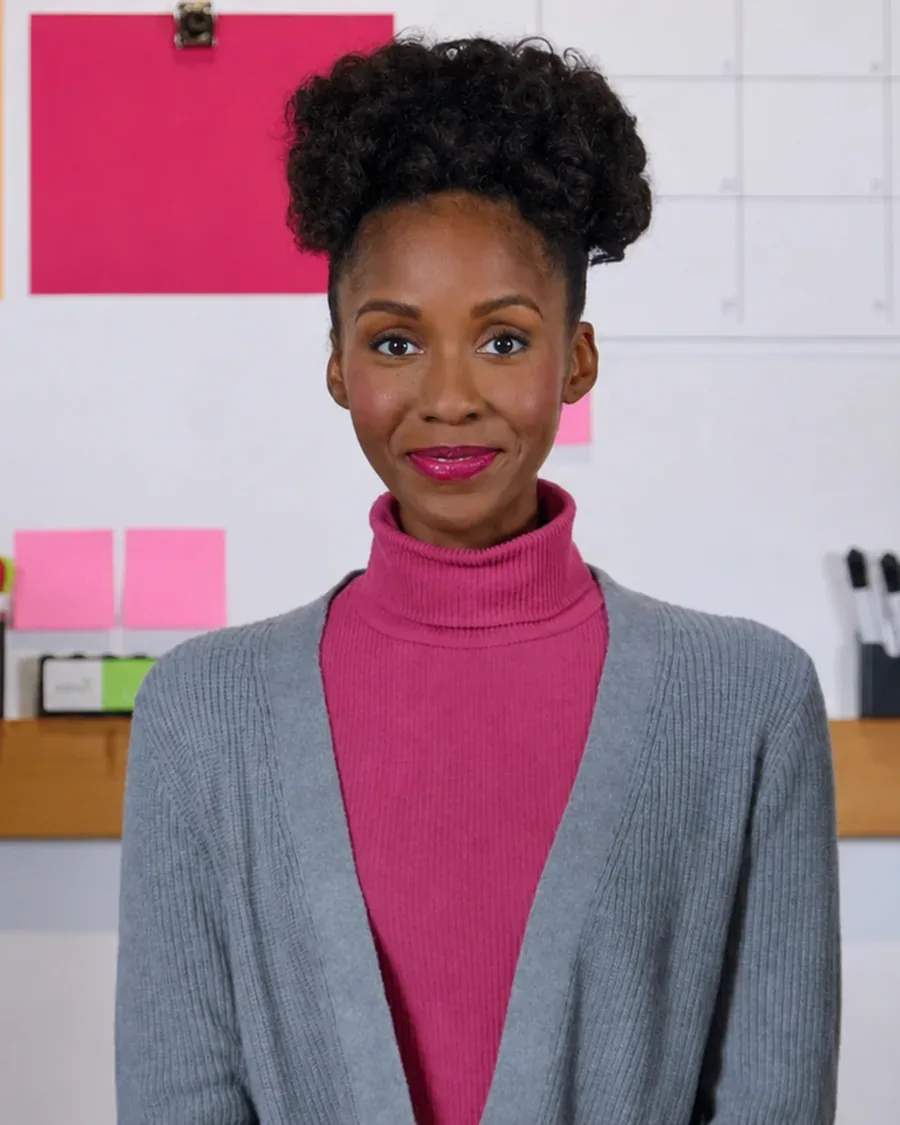
That work became Qull. We are building Sophia, our first AI personality, for daily speech practice. The goal is someone a person can return to, who remembers what they have practised with permission, understands the goals they bring, and makes it feel safe to keep trying. Families can use her directly, with a speech therapist’s recommendations when they have them. Practice should feel personal, patient, and engaging enough to want to come back tomorrow.
-
Sophia is our first AI personality.
-
Personalized speech practice, available every day.
-
She listens to the blocks, repetitions and prolonged sounds that ordinary transcripts miss.
-
Games and activities make speech practice engaging for children and adults.
-
Practice in the language you feel most comfortable speaking.
-
Our goal is to bring the cost down to a tenth of traditional therapy.
-
A record of your progress, so you can see how far you have come.

We’re beginning with a pilot designed for twelve families, focused on articulation, stuttering, and speech and language delay. Those are not interchangeable needs. The practice has to change with the person’s age, goals, and way of communicating, while Sophia remains someone familiar to return to.
I want this stage to answer ordinary, important questions. Can a family make it part of their day? Does a child want to come back? Can a parent understand what was practised and what still needs work? We need to learn from the difficult sessions as well as the good ones. Time spent in a call is not, by itself, evidence that someone’s speech has improved.
My ambition for Qull reaches beyond speech. I want to build a company that makes useful expertise available to people who would otherwise struggle to reach it. A tutor who learns how a child thinks. A companion who helps someone work through a difficult change in their career. Not one conversation that disappears, but help that becomes more useful over time, with the person’s permission.
I want that work to reach a great many people. I am willing to spend decades on it. But the way to get there is not to keep describing a larger future. It is to make something people trust enough to return to, and then become capable of helping more of them.
For now, that means Sophia and the families we are building for. Everything I have learned about selling, building, and listening to people has led me toward this work. I want to build something I would have wanted in my own life.
To understand my vision for Qull, read My Vision for AI Personalities.